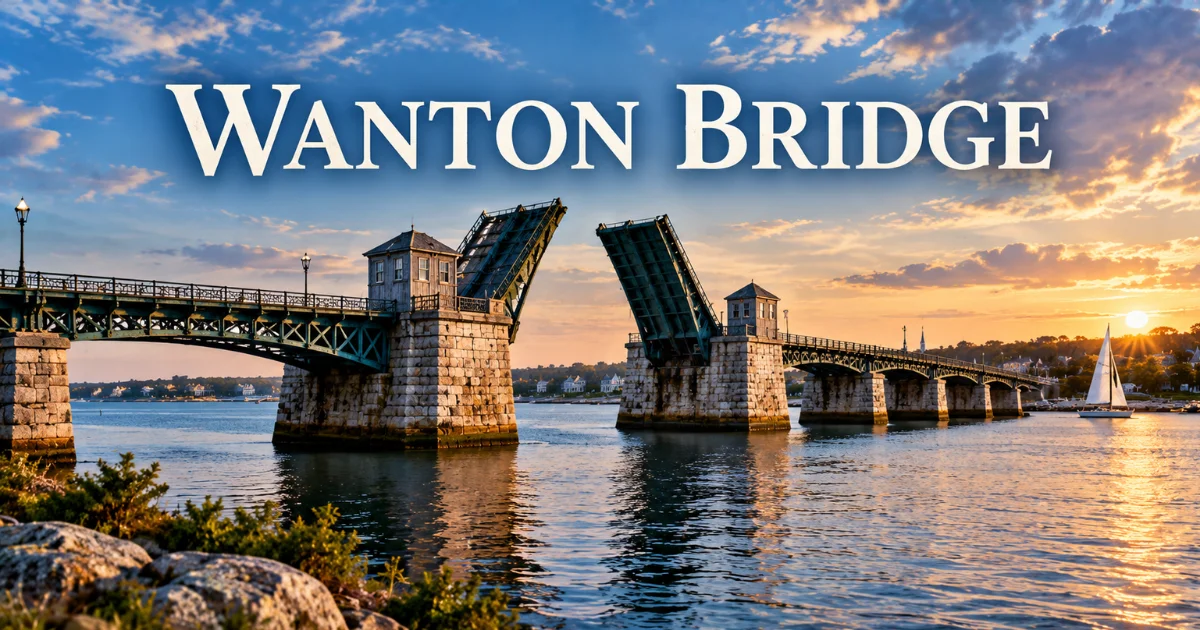
Wanton Bridge is a name tied to two very different things. One is a real river crossing in Rhode Island. The other is a historical romance novel from the late 1980s. Both share the exact same title, which causes confusion for anyone searching online.
This guide covers both. You’ll learn where the real Wanton Bridge stood, how it changed over the centuries, and what the book by Rosalyn Alsobrook is all about.
What Is Wanton Bridge?
Wanton Bridge most often refers to a historic crossing on the Sakonnet River, linking Portsmouth and Tiverton, Rhode Island. The site started as a simple ferry crossing and slowly grew into a series of bridges over 300 years.
Separately, Wanton Bridge is also the title of a 1989 romance novel by author Rosalyn Alsobrook, published by Kensington Publishing.
Topic
Category
Location or Author
Key Date
Wanton’s Ferry / Stone Bridge
Historic river crossing
Sakonnet River, RI
1640
Wanton Bridge (novel)
Historical romance
Rosalyn Alsobrook
1989
Why Two Things Share One Name
The overlap is likely a coincidence. The bridge’s name comes from the Wanton family, early colonial landowners tied to the ferry rights. The novel’s title appears to be unrelated to the Rhode Island crossing.
The historic Wanton Bridge sat on the Sakonnet River, a tidal waterway separating Aquidneck Island from mainland Rhode Island.
The Sakonnet River Crossing Between Portsmouth and Tiverton
Portsmouth sits on the western bank. Tiverton sits on the eastern bank. Without a crossing, travelers faced a long detour around the river. A direct route mattered a lot for daily life in colonial New England.
Why the Location Mattered for Local Trade
Farmers moved crops across the water. Fishermen used the crossing to reach coastal markets. Merchants shipped goods between the two towns. A reliable crossing kept the local economy moving.
Wanton’s Ferry Before the Bridge
Long before any bridge existed, a ferry carried people and goods across the Sakonnet River.
Early Ferry Service Dating Back to 1640
Historical records place ferry service at this spot as far back as 1640. That makes it one of the older transportation links in the region.
The Wanton Family Connection
The Wanton family held ties to the ferry property during the colonial period. William Wanton appears in records connected to the crossing. This family link is where the name “Wanton’s Ferry” — and later, Wanton Bridge — comes from.
A permanent bridge finally replaced the ferry, changing daily travel across the Sakonnet River for good.
The 1795 Wooden Toll Bridge
In 1795, the Rhode Island Bridge Company built a wooden toll bridge at the crossing. This gave travelers a fixed, dependable route instead of waiting on a ferry schedule.
The Toll System and Its Purpose
Tolls paid for upkeep and repairs. Wagons, horses, and pedestrians all paid to cross. It wasn’t free, but it was faster and far more reliable than the ferry it replaced.
Storm Damage and the Stone Causeway Era
Coastal weather is brutal on wooden structures, and the original Wanton Bridge was no exception.
Why Wood Struggled Against the Tide
Strong winds, tidal shifts, and storm waves wore down the timber supports over time. Repairs became routine, but they weren’t a long-term fix.
The Stone Causeway and Draw Span
Around 1810, builders replaced the timber structure with a stronger stone causeway. It included a movable draw span, letting boats pass through while road traffic continued overhead. This dual-purpose design solved two problems at once.
By the early 1900s, horse-drawn traffic was giving way to automobiles, and the old causeway needed an upgrade.
A Bridge Built for Route 138
In 1907, a steel bridge — known locally as the Stone Bridge — took over the crossing. It carried Rhode Island Route 138 and handled far more traffic than earlier versions ever could.
Keeping the Draw Span for Boat Traffic
Even with steel construction, the bridge kept its movable section. River traffic still needed a way through, and the design respected that need.
Hurricane Carol and the End of the Old Stone Bridge
Nature eventually caught up with the Stone Bridge, and its story came to a dramatic close.
The 1954 Storm Damage
Hurricane Carol tore through Rhode Island in 1954, badly damaging the steel structure. Restrictions followed, limiting heavier vehicles and eventually most traffic.
The 1956 Sakonnet River Bridge Takeover
A newer crossing, the Sakonnet River Bridge, had already been planned farther north. It opened in 1956 and took over as the main route, retiring the old Stone Bridge for good.
What’s Left Today
Parts of the original structure still remain. Locals use these leftover sections for fishing and as informal breakwaters along the shoreline.
Why the Name Wanton Bridge Causes Confusion
Anyone researching this crossing will run into several different names for what is essentially the same location.
Wanton’s Ferry, Howland’s Ferry, and Sanford’s Ferry
Historical documents use multiple names depending on the era: Wanton’s Ferry, Howland’s Ferry, and Sanford’s Ferry all describe crossings at or near this same stretch of river.
One Location, Many Titles Over Time
Wanton’s Ferry
Howland’s Ferry
Sanford’s Ferry
Wooden toll bridge
Stone causeway and draw span
Steel Stone Bridge
Sakonnet River Bridge
This naming drift explains why a simple search for Wanton Bridge can turn up conflicting or incomplete results.
Wanton Bridge Timeline
Year
Event
1640
Ferry service begins
1794
Ferry rights transferred to Rhode Island Bridge Company
1795
Wooden toll bridge opens
~1810
Stone causeway and draw span built
1907
Steel Stone Bridge opens
1954
Hurricane Carol causes major damage
1956
Sakonnet River Bridge replaces old crossing
Wanton Bridge Today
The Sakonnet River Bridge now handles all road traffic between Portsmouth and Tiverton. Remnants of the old Stone Bridge remain nearby, offering a physical link to nearly 400 years of transportation history at this single crossing.
Wanton Bridge, the Novel by Rosalyn Alsobrook
Separate from the Rhode Island crossing, Wanton Bridge is also a published novel with its own following among historical romance readers.
Author, Publisher, and Publication Details
The book was written by Rosalyn Alsobrook and published by Kensington Publishing in May 1989. It was released as a mass market paperback in English.
Genre and Reader Audience
Wanton Bridge sits within the historical romance genre, a category built around period settings and character-driven storylines. Readers who enjoy classic 1980s romance fiction make up its core audience.
Where Readers Find Copies Today
Used copies circulate through secondhand booksellers, and library access is available through interlibrary systems. The novel is no longer in mainstream print, which is typical for genre fiction from this era.
Is the Novel Related to the Rhode Island Bridge?
There’s no documented connection between the novel Wanton Bridge and the historic Sakonnet River crossing. The shared name appears to be coincidental rather than intentional.
FAQ’s
Where was Wanton Bridge located?
The historic crossing sat on the Sakonnet River, connecting Portsmouth and Tiverton, Rhode Island.
Was Wanton Bridge originally a ferry?
Yes. The earliest crossing at this site operated as a ferry, with records showing service as far back as 1640.
What year did the first permanent bridge open?
A wooden toll bridge opened at the crossing in 1795, replacing the earlier ferry service.
Why did the bridge have a draw span?
The movable draw span let boats pass through the crossing rather than being blocked by a fixed roadway above the water.
What was the Stone Bridge?
The Stone Bridge refers to the steel structure that replaced earlier versions of the crossing in 1907. It carried Rhode Island Route 138.
What happened to the Stone Bridge?
Hurricane Carol severely damaged the bridge in 1954. The newer Sakonnet River Bridge took over the main road route in 1956, ending the Stone Bridge’s active service.
Does Wanton Bridge refer to one single surviving structure?
No. The name covers multiple stages of the same crossing, including a ferry, a wooden bridge, a stone causeway, and a steel bridge, each replaced over time.
What is the modern crossing called?
Today’s active road crossing is known as the Sakonnet River Bridge.
Is Wanton Bridge also a book?
Yes. Wanton Bridge is a 1989 historical romance novel written by Rosalyn Alsobrook and published by Kensington Publishing.
Conclusion
Wanton Bridge tells two separate stories: a nearly 400-year transportation history on Rhode Island’s Sakonnet River, and a 1989 romance novel by Rosalyn Alsobrook. Together, they show how one name can carry very different meanings depending on what a reader is actually looking for.
I am the admin and author of RibbonMeanings. I research, verify, and explain ribboncolors, symbols, and meanings in simple words for readers worldwide.