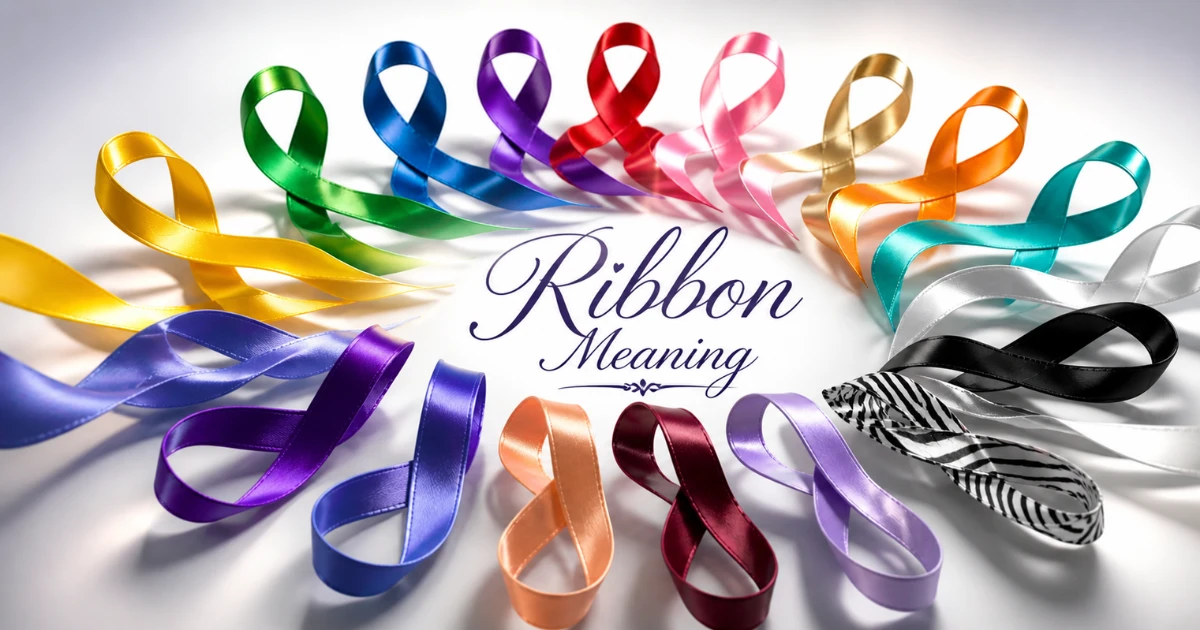
Awareness ribbons are powerful symbols. Each color carries a specific message — from health causes to social movements. This guide covers every ribbon meaning so you always know what someone is supporting.
| Color | Main Cause(s) | Month |
|---|---|---|
| Yellow | Military, Suicide Prevention, Sarcoma | July / Year-Round |
| Green | Mental Health, Organ Donation, Kidney Disease | May / March |
| Blue | Child Abuse, Autism, Prostate Cancer | April / September |
| Purple | Domestic Violence, Alzheimer’s, Pancreatic Cancer | Oct / Nov |
| Red | HIV/AIDS, Heart Disease, Blood Cancer | Dec / Feb |
| Pink | Breast Cancer | October |
| Gold | All Childhood Cancers | September |
| Orange | Gun Violence, Leukemia, MS, ADHD | June / September |
| Teal | Ovarian Cancer, Sexual Assault, PTSD, OCD | Sept / April |
| Gray | Brain Cancer, Parkinson’s, Diabetes | May / April |
| Black | Melanoma, Narcolepsy, Mourning | May |
| White | Lung Cancer, Bone Cancer, Peace | November |
| Lavender | All Cancers (General), Foster Care | February |
| Burgundy | Multiple Myeloma, Meningitis, Sickle Cell | March / August |
| Lime Green | Non-Hodgkin Lymphoma, Lyme Disease | September / May |
| Peach | Uterine / Endometrial Cancer | September |
| Violet | Hodgkin Lymphoma | September |
| Periwinkle | Eating Disorders, Stomach Cancer | Feb / Nov |
| Pink+Blue | Infant Loss, SIDS, Pregnancy Loss | October |
| Zebra | Rare Cancers, Ehlers-Danlos Syndrome | Nov / Feb |
Yellow Ribbon Meaning
The yellow ribbon meaning stands for hope, support, and remembrance. It is one of the oldest and most recognized awareness symbols in the United States. People wear it to show solidarity with causes close to their hearts.
Yellow ribbons represent:
- Military support and troop solidarity
- Suicide prevention awareness
- Missing children and POW/MIA recognition
- Sarcoma and bone cancer awareness
- Endometriosis awareness (March)
Yellow Ribbon on a Tree
Tying a yellow ribbon around a tree is a powerful gesture of waiting and hope. It became popular during the 1979 Iran hostage crisis, when families tied ribbons to trees hoping for their loved ones’ safe return. During the Gulf War, it became a nationwide symbol of support for deployed troops. Today, a yellow ribbon on a tree still means — “I am waiting for you to come home.”
Yellow Ribbon Cancer
The yellow ribbon for cancer represents sarcoma and bone cancer awareness. July is Sarcoma Awareness Month. Organizations like the Sarcoma Foundation of America use this ribbon to promote research funding and early detection. The yellow ribbon also represents bladder cancer and liver cancer in some campaigns.
Green Ribbon Meaning
The green ribbon meaning is most widely associated with mental health awareness. It represents hope, healing, and support for those facing mental health challenges. Green ribbons are worn globally, especially during Mental Health Awareness Month in May.
Green ribbons represent:
- Mental health awareness (May)
- Depression and bipolar disorder awareness
- Organ donation and transplant support
- Kidney disease awareness (March)
- Cerebral palsy awareness
- Environmental protection (April/Earth Day)
- Childhood depression awareness
Green Ribbon on a Tree
A green ribbon tied to a tree or public space is often a symbol of environmental awareness or community solidarity after a natural disaster. In some campaigns, it represents organ donation drives, encouraging people to register as donors.
Green Ribbon Cancer
The green ribbon for cancer represents several types. Kidney cancer and liver cancer both use the green ribbon. Emerald green specifically represents liver cancer (October awareness month). Green is also used for bile duct and gallbladder cancer awareness in February. Kidney Disease Awareness Month falls in March.
Blue Ribbon Meaning
The blue ribbon meaning covers a wide range of causes depending on its shade. It is most commonly linked to child abuse prevention, anti-bullying, and autism awareness. Blue ribbons come in multiple shades — each carrying its own specific meaning.
Blue ribbons represent:
- Child abuse prevention — Dark Blue (April)
- Anti-bullying awareness
- Autism awareness
- Colon and colorectal cancer — Dark Blue (March)
- Prostate cancer — Light Blue (September)
- Men’s health — Light Blue (June)
- Thyroid disease — Light Blue
- Eating disorders — Periwinkle Blue
- Stomach and esophageal cancer — Periwinkle Blue
Blue Ribbon Cancer
The blue ribbon cancer meaning varies by shade. Dark blue represents colorectal cancer (March awareness month). Light blue represents prostate cancer (September) — one of the most common cancers in American men. Periwinkle blue is used for stomach and gastric cancer awareness (November). A blue, pink, and teal combined ribbon represents thyroid cancer (September).
Purple Ribbon Meaning
The purple ribbon meaning represents awareness for multiple important causes. It is one of the most versatile ribbon colors, adopted by several major organizations across the U.S. The color purple symbolizes courage, dignity, and perseverance.
Purple ribbons represent:
- Domestic violence awareness (October) — adopted by NCADV in 1990
- Pancreatic cancer awareness (November)
- Alzheimer’s disease awareness (November)
- Epilepsy awareness — Purple Day is March 26
- Lupus awareness (May)
- Crohn’s disease and cystic fibrosis awareness
- Animal abuse prevention (April)
- ADHD awareness
Key fact: The Pancreatic Cancer Action Network chose purple to honor Rose Schneider, a woman whose daughter founded the organization after losing her mother. Purple was her favorite color.
Red Ribbon Meaning
The red ribbon meaning is globally recognized as the symbol of HIV/AIDS awareness. It was created in 1991 by Visual AIDS artists in New York and worn at the Oscars that year — becoming one of the most iconic awareness symbols in history. World AIDS Day is December 1 and red ribbons are worn worldwide.
Red ribbons represent:
- HIV/AIDS awareness (December 1 — World AIDS Day)
- Heart disease and cardiovascular awareness (February)
- Blood cancer and blood disorders (September)
- Drug abuse prevention — DARE program (April)
- Drunk driving awareness — MADD campaigns
- Stroke and hypertension awareness
- Hemophilia awareness (March)
- Substance abuse prevention
Red Ribbon Shades
Different shades of red carry different meanings. Burgundy represents multiple myeloma (March), meningitis, brain aneurysm, and hospice care. Peach represents uterine and endometrial cancer (September). Cranberry is used for fibromyalgia awareness. Amber represents appendix cancer (August).
Black Ribbon Meaning
The black ribbon meaning is primarily associated with mourning, grief, and remembrance. It is one of the oldest symbolic ribbons, with roots in Victorian mourning traditions. A black ribbon communicates loss and respect without needing words.
Black ribbons represent:
- Mourning and remembrance for a loved one
- Melanoma and skin cancer awareness (May)
- Narcolepsy and sleep disorder awareness
- Gang violence prevention
- POW/MIA solidarity
- National mourning after tragedies (9/11, disasters)
- Anti-violence campaigns
Jewish tradition uses a torn black ribbon called Kriah, worn during Shiva — the seven-day mourning period — to symbolize a torn heart.
On a house or door, a black ribbon signals — “Grief lives here. Approach with care.” It is a quiet, respectful way to signal loss to neighbors and visitors.
Pink Ribbon Meaning
The pink ribbon meaning is universally recognized as the symbol of breast cancer awareness. It is the most widely known awareness ribbon in the world. The pink ribbon was born in 1992 when Self magazine and Estée Lauder distributed it during Breast Cancer Awareness Month in October.
Pink ribbon shades and their meanings:
- Standard Pink — Breast cancer (October)
- Hot Pink — Inflammatory breast cancer (October)
- Pink + Blue — Male breast cancer (October)
- Pink + Teal + Green — Metastatic breast cancer (October)
- Pink + Teal — Hereditary and gynecologic cancers
Gold Ribbon Meanin
The gold ribbon meaning represents all childhood cancers. It is the universal symbol for pediatric cancer awareness worldwide. Gold was chosen because gold is rare and precious — just like children.
The gold ribbon was introduced in the 1990s by the Candlelighters Childhood Cancer Foundation. It has since been officially endorsed by the World Health Organization (WHO) — giving it the same global authority as the pink ribbon for breast cancer.
White Ribbon Meaning
The white ribbon meaning represents lung cancer awareness, peace, and anti-violence movements. White symbolizes purity, innocence, and hope. It is used across several campaigns with different but related themes.
White ribbons represent:
- Lung cancer awareness (November) — second most common cancer in the U.S.
- Bone cancer awareness (August)
- Peace and anti-war movements
- Safe motherhood awareness (May)
- Anti-violence against women campaigns
- Adoption and child protection awareness
- Osteoporosis awareness (May)
Orange Ribbon Meaning
The orange ribbon meaning is most prominently associated with gun violence prevention and leukemia awareness. Orange is also used for kidney cancer, multiple sclerosis, and ADHD awareness. It is a high-energy, highly visible color that demands attention.
Orange ribbons represent:
- Gun violence prevention — Wear Orange campaign (June)
- Leukemia awareness (September)
- Kidney cancer awareness (March)
- Multiple sclerosis awareness (March)
- ADHD awareness (October)
- Self-harm and self-injury awareness
- Hunger and malnutrition awareness
- Suicide prevention (September)
- Sensory processing disorder awareness
The Wear Orange campaign started in 2015 in Chicago after a teenager named Hadiya Pendleton was killed by gun violence. Her friends wore orange — the color hunters wear to signal “don’t shoot.” Orange now means: value human life.
General Ribbon Meaning
Awareness ribbons as a whole are symbols of solidarity, support, and advocacy. They create visual unity around a cause and spark meaningful conversations. Ribbons date back to medieval times when women gave them to knights as tokens of affection and support.
In modern times, ribbons gained widespread use in the early 1900s when yellow ribbons were given to U.S. soldiers. The red ribbon for HIV/AIDS (1991) and pink ribbon for breast cancer (1992) turned the awareness ribbon into a global movement.
A few important general ribbon meanings:
- Lavender — All cancers (February, Cancer Prevention Month)
- Zebra Print — Rare and neuroendocrine cancers (November)
- Rainbow — LGBTQ+ Pride and inclusion
- Silver — Disabled children, elderly abuse
- Gray — Brain cancer (May), Parkinson’s disease (April), diabetes (November)
- Violet — Hodgkin lymphoma (September)
- Lime Green — Non-Hodgkin lymphoma (September), Lyme disease (May)
- Periwinkle — Eating disorders (February), stomach cancer (November)
- Burgundy — Multiple myeloma (March), meningitis (August)
- Peach — Uterine and endometrial cancer (September)
- Amber — Appendix cancer (August)
Combined ribbons carry combined meanings. For example:
- Blue + Pink = Infant loss, SIDS, pregnancy loss (October)
- Teal + Purple = Suicide prevention, sexual assault awareness
- Red + Blue = Congenital heart disease (February)
Teal Ribbon Meaning
The teal ribbon meaning is most widely associated with ovarian cancer awareness and sexual assault awareness. Teal combines the calmness of blue with the healing energy of green — making it a powerful symbol of resilience and recovery.
Teal ribbons represent:
- Ovarian cancer awareness (September) — 5th leading cause of cancer death in women
- Sexual assault and rape awareness (April)
- PTSD awareness (June)
- Anxiety disorder awareness (May)
- OCD and panic disorder awareness
- Food allergy awareness (May)
- Polycystic ovary syndrome (PCOS) awareness (September)
- Addiction recovery awareness
- Anti-bullying awareness (October)
Key fact: According to the National Ovarian Cancer Coalition, approximately 1 in 78 women will develop ovarian cancer during their lifetime. Because symptoms are subtle, it is often diagnosed late — making awareness critical.