How the Phrase Whistleblew Bird Got Attached to Birds
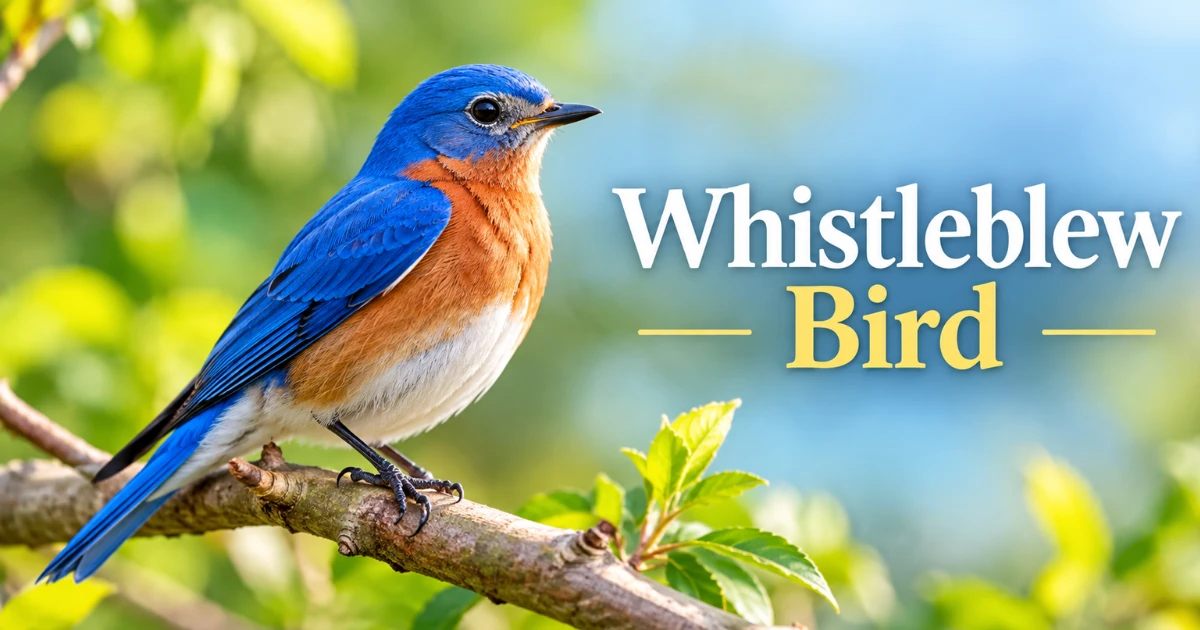
So why does whistleblew bird keep showing up in bird searches? The answer sits in how people describe sounds online.
Many birds produce clear, musical, whistle-like calls. When someone hears one and doesn’t know the species, they often search using whatever words feel closest — and whistleblew sounds a lot like whistle plus bird. Over time, this kind of informal, sound-based labeling turns into a real search phrase, even without any official backing.
Is Whistleblew Bird a Real Species?
No Official Bird Carries This Name
No field guide, checklist, or scientific database lists a bird called whistleblew. This is a firm, verifiable fact.
Bird names go through formal review by ornithological groups before they’re accepted. “Whistleblew” has never passed through that process.
Why the Confusion Happens So Often
Bird identification by ear is genuinely hard. A whistled call can sound almost human, and without a visual, people reach for descriptive shortcuts instead of scientific names.
This pattern isn’t unique to this phrase. Plenty of birds pick up folk names long before — or instead of — an official common name.
Meet the Whimbrel — The Bird Behind the Whistleblew Search
The Whimbrel’s Whistle Call
The Whimbrel (Numenius phaeopus) is a migratory shorebird in the sandpiper family. Its call is a rapid, rolling series of clear whistled notes, often written as a fast whi-whi-whi-whi-whi.
That rippling, whistle-heavy pattern is likely the strongest real-world match for anyone searching “whistleblew bird.” It’s loud, distinctive, and easy to notice even from a distance across open water or tidal flats.
Where the Whimbrel Lives and Migrates
Whimbrels breed on Arctic tundra across North America, Europe, and Asia, then travel enormous distances to wintering grounds along tropical and subtropical coastlines. Tracking studies by researchers at the Center for Conservation Biology have followed individual Whimbrels flying nonstop for several days, covering thousands of miles between stopovers.
One tracked bird, nicknamed “Hope,” became well known for surviving a hurricane mid-flight during her migration — a striking example of how tough this whistling shorebird really is.
Several familiar backyard birds produce whistled songs that trip up the same kind of search. The Northern Cardinal sings a bold, sliding birdy-birdy-birdy. The Tufted Titmouse repeats a sharp, ringing peter-peter-peter. Both are common across the eastern United States and are frequent culprits behind “what bird is whistling at me” moments.
Wetland and Coastal Whistlers
Away from the backyard, whistling calls show up near water too. Whistling-ducks — a group that includes the Black-bellied Whistling-Duck — are named directly for their high, reedy whistle, unusual among ducks that mostly quack. The Hermit Thrush adds a flute-like variation, opening with one long clear note before a musical cascade.
Why Do Birds Whistle at All?
The Syrinx: A Bird’s Built-In Instrument
Birds don’t make sound the way humans do. Instead of a larynx, they use an organ called the syrinx, located where the windpipe splits into two bronchial tubes.
This structure lets some species produce two independent notes at once, which is part of why certain bird songs sound so pure, layered, and almost musical to the human ear.
What Whistled Calls Communicate
A whistled call usually isn’t random. Birds use these sounds to defend territory, attract a mate, warn others of danger, or stay in contact with a mate or flock. Clear, tonal whistles also tend to travel farther through open air and foliage than harsher, noisier calls — which is exactly why they carry so well across a yard, marsh, or coastline.
Long before search engines existed, English folklore already had a place for mysterious whistling birds. The Seven Whistlers legend describes a group of ghostly, whistling voices heard flying overhead at night, traditionally seen as a bad omen — some accounts even claim coal miners refused to work after hearing them.
Why the Whimbrel Fits the Legend
Because the Whimbrel’s fast, whistled call can occur during nighttime migration flights, it has long carried the folk nickname “seven-whistler” in parts of the UK. This cultural link helps explain why unusual whistling birds have attracted imaginative names across generations — and it’s likely part of why a phrase like whistleblew bird feels oddly familiar even though it isn’t official.
How to Identify a Whistleblew-Style Bird Call
Listen for Pattern and Pace
Start by noting whether the sound repeats the same phrase or changes each time. A steady repeated whistle points toward species like the Cardinal or Titmouse, while a fast rolling series points toward shorebirds like the Whimbrel.
Match the Sound to the Habitat
Location narrows things down fast. A whistle near open water or mudflats is more likely a Whimbrel or another shorebird. A whistle from a tree or shrub near a house points toward a common songbird instead. Combining sound pattern with habitat is the fastest way to move from a vague search term to a real answer.
FAQ’s
Is whistleblew bird a real bird species?
No. Whistleblew bird is not an officially recognized species in any ornithological database or field guide.
Is whistleblew an actual English word?
Yes. Whistleblew is the standard simple past tense of the verb whistleblow, meaning to report wrongdoing.
What part of speech is whistleblew?
Whistleblew functions as a past-tense verb form. It follows the same irregular pattern as verbs like blow becoming blew.
Can whistleblew bird describe a bird informally?
Yes. People sometimes use the phrase informally to describe birds with clear, musical, whistle-like calls, even though it isn’t a scientific term.
Which real bird best matches the whistleblew search?
The Whimbrel is the strongest real-world match, thanks to its fast, rolling, clearly whistled call and its folk nickname “seven-whistler.”
Do all birds whistle?
No. Whistled songs are common among songbirds and certain shorebirds, but many species communicate through calls that are harsher, croaking, or non-tonal instead.
Conclusion
Whistleblew bird isn’t a species — it’s a language mix-up wrapped around a real, fascinating sound. The closest true answer is the Whimbrel, a whistling shorebird with folklore roots stretching back centuries.
I am the admin and author of RibbonMeanings. I research, verify, and explain ribboncolors, symbols, and meanings in simple words for readers worldwide.